Friday, July 25, 2008

How to Leash Train a Dog

it is important to have a dog that is properly leash trained। A dog that isn't leash trained can run into many risks including dog fights and getting hit in traffic. As soon as you get a new dog, leash training should be a priority. Consider the following tips to properly leash train your dog.

Things You’ll Need:

  • Leash
  • Collar

Get a Leash

Step1
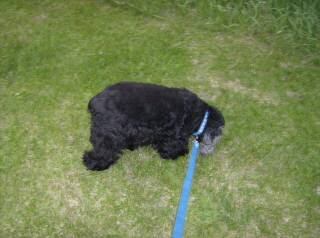
Place the leash on your pet while he eats and just let it lie at his side. This provides your dog with the chance to associate the leash with something pleasant and gets him used to having a leash.
Step2
Hold the leash in your hand, after giving the dog a few days to acclimate to the leash, and follow your dog around the house. Do this in increasingly longer periods of time until your dog becomes used to it.
Step3
Go outside in a supervised area such as your backyard. Allow the dog to roam with the leash dragging behind him. Pick up the leash occasionally and show it to the dog while offering a treat.
Step4
Start to coax the dog along by offering treats and praising your dog when he follows you.
Step5
Teach him to stay with you. Once your dog has started to walk with a leash you can begin this process. To do this pull in a clockwise turn if the dog moves in another direction. This will teach him to stay at your side in order to gain your praise.

How to Train Your Dog to Come When Called

As with any sort of training, start your dog off slowly when teaching him to come, then gradually increase your expectations।

Things You’ll Need:

  • Canvas Dog Toys
  • Dog Leashes
  • Dog Toys
  • Dog Training Aids
  • Dog Treats
  • Fleece Dog Toys
  • Leather Dog Collars
  • Rope Dog Toys
  • Vinyl Dog Toys
Step1
Begin inside the house, with you and your dog in the same room.
Step2
Have some dog treats on hand. Facing your dog, back up a few steps.
Step3
Call the dog by name, followed by the simple command "Come." (For example: "Spike, come.")
Step4
Reward your dog with a treat after he approaches you.
Step5
Slowly increase your expectations for your pup by calling him from another room.
Step6
Gradually move into the backyard, front yard on a long leash and so on.
Step7
Praise and encourage your dog as he comes to you.
Step8
Remember to say "good" right when the dog exhibits the behavior you want.

DECIDE WHAT BREED BEST FITS YOUR PERSONALITY

Getting a pet dog is really a Zen process of self-discovery. You can't know the right dog for you until you know yourself. For example, a jock would prefer an active dog. A lazy slug would prefer a dog that doesn't require much exercise. A touchy-feely person would prefer a friendly dog. A tightly-wound person would probably prefer a dog that doesn't bark or shed too much. Think of picking a pup like choosing a mate; you have to find one that compliments your personality.

Here are some very general guidelines. Of course, we won't list every dog breed on the planet, but they'll get you thinking in the right direction:

Intelligent dogs

  • Poodle
  • German Shepherd
  • Australian Sheepdog
  • Belgian Sheepdog
  • Keeshond

Dogs that don't require much exercise

  • Dachshund
  • Brussels Griffon
  • French Bulldog
  • Manchester Terrier
  • toy breeds (such as a Chihuahua or Pekingese)

Good with kids

  • Pug
  • English Cocker Spaniel
  • Beagle
  • Basset Hound
  • Brittany Spaniel
  • Old English Sheepdog

Good city dogs

  • Pug
  • Basenji
  • Boston Terrier
  • Bulldog
  • Lhasa Apso
  • Welsh Corgi
  • Scottish Terrier

Quiet dogs

  • Basenji
  • Borzoi
  • Chesapeake Bay Retriever
  • Greater Swiss Mountain Dog
  • Whippet

Friendly dogs

  • Brittany Spaniel
  • Bichon Frise
  • Old English Sheepdog
  • Bearded Collie
  • Golden Retriever
  • Labrador Retriever

There are dozens of breeds and dozens of traits to sort them by. You get the idea.

Again, these guidelines are EXTREMELY rough. Picking a dog based on these lists is like getting a phone number off a bathroom wall. There are no shortcuts. A good place to start your research is by checking out the American Kennel Club's complete list of breeds. Then try going to a dog show or talking to a vet. In our opinion, though, the absolutely best way to research is to talk to friends who have dogs. Believe us, they'll give you more information than you care to know.

In case you didn't realize it, all of the breeds we listed above are purebreds. This means that they are the product of parents of the same breed. To get a true purebred worthy of being in a dog show, you often have to pay thousands of dollars. Most people get mixes of some sort (the "cockapoo," a combo of a cocker spaniel and a poodle, is quite popular), because rumor has it that purebred dogs can have personality problems because the gene pool is so small (think of people who marry their cousins). As a result, many people choose to go with a mutt, a mish-mash of different breeds. Mutts can combine the best of two or more breeds in a one-of-a-kind dog. Having a mutt is like the canine equivalent of owning an original work of art. Benji was a mutt. And who doesn't like Benji?

Is this all sounding like too much work? Then go back again and reread step 1, because the work is just beginning. A dog is a living thing, but millions of dogs die every year because their masters didn't realize how much work caring for a dog really is. We're not trying to bum you out, but this is nothing compared to how bummed you'll be if you become one of those failed former dog owners.

How to Train Your Dog to Stay

Teaching your dog to "stay" involves the same positive reinforcement techniques necessary for all training। Be sure your dog understands a "release" command first so she'll know when it's OK to move from the "stay" position.

Things You’ll Need:

  • Dog Bones
  • Dog Dishes
  • Dog Food
  • Dog Toys
  • Dog Training Aids
  • Dog Treats
Step1
Be sure your dog understands a release command, such as "free" or "okay," before teaching this command.
Step2
Have your dog sit or lie down in front of you. (See Related eHows "Train Your Dog to Sit" and "Train Your Dog to Lie Down.")
Step3
Place your hand, palm open, in front of your dog's nose and give the command "Stay."
Step4
Say "Good" at the exact moment your dog exhibits the behavior you want.
Step5
Give the release command immediately after (within 1 to 2 seconds), followed by treats and unlimited praise.
Step6
Reward your pet even if she only "stayed" for 1 second; and always offer rewards for even slight indications of understanding.
Step7
Lengthen the amount of time your pet remains in the stay position very gradually, and slowly move farther away.
Step8
Remember to give the release command after every successful "stay" as you increase the length of time your dog must remain in the position.
Step9
Avoid going into another room until your dog fully understands the command.
Step10
Train in 5-minute sessions.

How to Potty Train Dog to go to the Same Place in Yard

Training a dog to go potty in the same place in the yard is not as hard as it may seem। Dogs are all about instinct and scents. If something offers the correct odor, a dog will happily urinate on it every time. There are some new tools on the market to make it easier to train a dog to go potty in the same place in the yard. Here are some helpful tips on how to use and where to get these products, and how to train without props.

Things You’ll Need:

  • Dog collar
  • Leash
  • Pee post
  • Urine attract spray
  • Puppy pads
  • Dog be gone powder/spray

Use a Pee Post

Step1
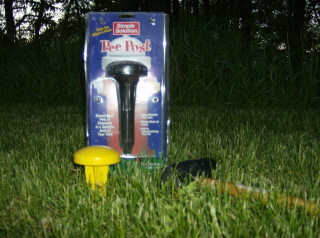
Many pet shops and pet websites offer a dog training tool called a Pee Post. The one I am using in this example is made by Simple Solution. Dogs are instinctively attracted to the pheromone-coated post and most will urinate immediately.
Step2
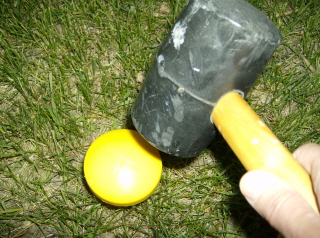
While the dog is in the house, hammer the Pee Post into the ground int the area designated for potty training. Don't worry about having to mow around a pee post. The grass will probably not grow around it due to the dog urine. Leave the dog in the house so the hammering doesn't scare it.
Step3
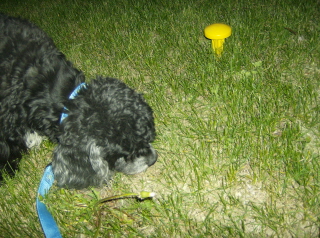
Take the dog to the Pee Post, and let nature take its course. Most male dogs will immediately urinate on or very near the post, but females may take slightly longer.
Step4
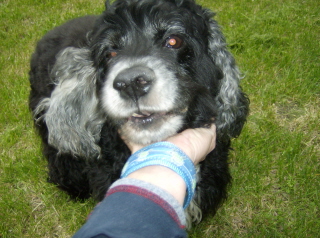
Praise the dog highly when it successfully goes in the correct area. Give the dog a lot of "Good dogs" and pats.
Step5
Spray stay-off on areas where you don't want the dog to go.

Use Attractants

Step1
Liquid dog attractants usually come in a small bottle. Only a few drops are necessary to attract the dog to an area and stimulate it to mark. Place a few drops of the attractant in the area where the dog is to eliminate.
Step2
Take the dog to the area where you applied the attractant. State the command, "Go potty" or whatever you choose. Let the sniffing begin.
Step3
Highly praise the dog when it is successful. It may take a few tries, but when it happens give the dog plenty of affection.
Step4
Repetition is the key to all dog training. Do exactly the same thing every time the dog goes out to the area. The more often you repeat and reward the pet, the better and quicker the results.

How to Train Your Dog to Sit

Things You’ll Need:

  • Dog Dishes
  • Dog Food
  • Dog Toys
  • Dog Training Aids
  • Dog Treats
Step1
Stand in front of your dog.
Step2
Hold a treat right near your pet's nose, just out of his or her reach.
Step3
Slowly move the treat over your pup's head and toward his or her tail.
Step4
Say your dog's name, and give the command "Sit."
Step5
Keep the treat at nose level. If the treat is held too high, the dog will jump.
Step6
Say the word "good" at the exact second the dog sits.
Step7
Praise abundantly and give your pet a treat for any movement that resembles the sit position.
Step8
Release your pet from the sit position with the "release" or "free" command.
Step9
Repeat for 5 minutes.

चूसीं THE RIGHT DOG FOR YOU?

1. MAKE SURE YOU'RE READY TO GET A DOG

Here's the dog-owner's mantra: A dog is a living thing. A dog is a living thing. A dog is a living thing. If you want a dog because you think it'll look great in that new jeep you just bought at 15% interest, think how much fun it will be when it tears up the leather upholstery so thoroughly that even the repo man is impressed. This isn't like buying a new pair of shoes. It's closer to having a child. A child that doesn't speak English and occasionally eats poop. If that thought sends you screaming from the room, consider another kind of pet instead, like maybe a fish or a plant or a pair of shoes.

Repeat the mantra a few more times. A dog is a living thing. A dog is a living thing. A dog is a living thing. If you work from 8 a.m. to 10 p.m. six days a week, you're going to have a lonely, unhappy dog on your hands. And how do dogs show their unhappiness? In the absence of being able to say, "Pay attention to me, Poindexter," they'll do things like pee on your high school yearbook or methodically eat all your CDs. This isn't their fault. All together now - a dog is a living thing, a dog is a living thing, a dog is a living thing.

Here's a little "pup quiz" (the puns never stop!) that will help determine if you are ready to add one more member to the family. Answer "yes" or "no" to the following questions:

  1. Do you like dogs?
  2. Does the health of your household allow for a pet dog? (allergies, etc.)
  3. Does your building allow dogs?
  4. Are you financially secure?
  5. Are you OK with picking up dog poop, mopping up dog pee, or cleaning up dog vomit?

If you answered "no" to any of these, then you're probably not ready to become a dog owner। That's OK though . . . you're still allowed to like them.


HOUSEBREAK YOUR DOG

The absolute first thing your puppy must learn is housebreaking - that is, he must learn where and when he may do his business. Besides being substantially advantageous to the hygiene of your household, dogs benefit from having rules and a routine - as pack animals, they look for duties issued by the pack leader and naturally enjoy keeping schedules. Here are the steps to housebreaking your dog:
  1. The best age to begin housebreaking your puppy is between 8 and 12 weeks old.

  2. Experts suggest incorporating a crate in a young dog's training process. (To housebreak an older dog, skip this section.) A crate usually resembles a cage, with a locking door and see-through bars, and should be big enough for the dog to move around in. While it sounds like a miniature jail cell, crates should not be used to punish your puppy. The idea is to make the crate into a doggy bedroom - someplace where your puppy can play and sleep. He should never be confined in his crate for more than two hours at a time.

  3. Because dogs, thank goodness, don't believe in eliminating by their sleeping areas, your puppy will not relieve himself in the crate unless you've cruelly locked him in there for longer than he was able to hold it in. Three-month old puppies generally need to eliminate every three hours, so lead your puppy to a designated outdoor bathroom spot often.

  4. Try to always leave the house through the same door - the door you'd like your dog to scratch at to signal his need to go out in the future.

  5. Try to take your dog out at around the same times each day. A routine will eventually be established, and your dog will soon know to hold it in until you take him out.

  6. If your not-yet-housebroken dog is used to roaming freely around the house, look for clues that tell you he needs to go. Your dog may suddenly put his nose down and sniff the ground intently. He may begin to circle an area. Or, he may stare at the door with an intense look on his face. Signs like these tell you to drop what you're doing and get that dog out of the house. If you catch your dog doing his business inside (and only if you catch him - not after you discover he's already committed the crime), rush over and stop him by grasping his collar, pulling up on it, and saying, "NO" in a deep, stern voice. Then take him outside to let him finish up and praise him with pats on the head or a pleasantly chirped, "Good Fido!" when he does. (Note: Don't say "Fido" if your dog's name is "Rex.")

  7. Whenever your dog relieves himself outdoors, say "hurry up" and then praise him. "Hurry up" serves as the trigger words that will eventually make your dog go on command. That's right, if you consistently say "hurry up" as your dog is doing his business, those words will stick in his mind as an indication to let it all loose, and soon he'll be doing just that whenever he hears the command. Those magical words will make a frigid winter walk much shorter for the future.

  8. When issuing commands, use a deep, gruff voice. Even though most of your speech is just garbled psychobabble to your dog, he will notice tone and pitch differences in your voice. So if you normally sound like Jewel and you suddenly switch to a Sean Connery intonation to deliver a command, he'll pay specific attention to what you're saying in the authoritative Connery voice. Conversely, when you're praising your dog, use a high-pitched, happy voice and incorporate his name a lot. Throw in some excited squealing to really get the point across. You may think you sound ridiculous (and you probably do to other humans), but your dog will eat it up. Encouragement is really important, so ALWAYS praise your dog when he does you proud.

  9. One final thing on housebreaking your dog - maintain your patience. We know that when the stakes are as high as cleaning dog waste off carpets on an hourly basis and having your entire house smell like a public bathroom, you want him to be housebroken as soon as possible, if not sooner. But losing your temper or giving up on your dog will only set back the rewarding moment when things suddenly click in his head: "I'm being housebroken! Well, why didn't you just say so?"

  10. Your dog WILL have accidents at first, so don't complain about mopping up dog pee. To stop persistent accidents, just use common sense. If your dog tends to pee during the night, don't give him water before bedtime. If he tends to poop a lot during the night, take him out one last time right before bed, and wake up early to take him again. First cater to his schedule, and then slowly change it to yours.

TEACH YOUR DOG SOME FANCIER TRICKS

Let's face it: with commands like "sit" and "come" under your dog's belt, you can take him out in public, but dog food commercial directors aren't pounding down your door. You want a dog that raises eyebrows, attracts comely (human) members of the opposite sex, and pays your bills. While all of these things may not actually happen, we can help you teach your dog a few more fun little tricks.

Shake

  1. Get your dog to sit first and hold his attention with a treat.

  2. Then pick up one of his front paws and hold it very loosely in your hand as you say, "SHAKE."

  3. Don't grab his paw or he'll get freaked out by the pressure and withdraw.

  4. Reward him immediately and repeat the exercise several times before giving him a chance to place his paw onto your open palm by himself.

  5. If he doesn't do it after a couple of seconds, pick up his paw for him, while saying, "SHAKE," and guide it into your hand.

  6. Eventually, he'll get the idea.

Fetch

You'll need your dog on a long leash or clothesline for this trick:

  1. Catch his attention with his favorite toy and get him excited by waving it around before throwing it a short distance away from you.

  2. As he inevitably starts to run towards it, yell, "FETCH!"

  3. Once your dog picks up the object, don't walk towards him; wait until he comes to you.

  4. If he starts to wander off elsewhere, pick up the leash and gently pull him towards you.

  5. Pet him on his back and wait for him to drop the toy on his own. (If you try to grab it out of his mouth, he'll interpret it as a tug-of-war game.)

  6. If a couple of hours have gone by and you're still waiting for the toy to hit the ground, present him with a tasty treat or another toy as an incentive.

  7. Then as soon as your dog drops the toy, pick it up and do it all over again.

Door

This is a great trick to teach your dog how to shut doors on his own:

  1. Situate your dog and yourself in a room where the door closes when pushed towards the doorjamb. (Make sure it isn't a swinging door.)

  2. Position the door to be only three inches open.

  3. Hold a treat up against the door, at the height of your dog's nose.

  4. Tell your dog to come.

  5. As he rushes over to claim his reward, lift the treat up and away just before he reaches it, so his nose bumps against the door and it gets pushed forward a little.

  6. As he comes in contact with the door, say, "DOOR," then praise him.

  7. If he doesn't touch the door, don't reward him; just repeat the exercise until he accidentally does.

  8. Have him push the door further and further, until it actually shuts. With consistent practice and patience, he'll soon be slamming doors shut right and left.

If you should come across any specific problems during any of these training exercises, talk to your dog's vet or with other dog owners (the ones with the obedient dogs). Or, check out some dog training discussion forums on-line at Petopia.

Your dog is now ready for Ivy League admission. And now that you've been trained in how to train a dog, reread these steps at least twice and help yourself to your favorite treat.

Good reader! Good reader!

TEACH YOUR DOG SOME BASIC COMMANDS

Around 12 weeks of age, your dog is ready for some command training.

Pre-training tips:

  1. You should hold training sessions with your dog at least twice a day and each session should be approximately 10-15 minutes long (shorter if either you or your dog get impatient or distracted easily).

  2. When you first begin training, keep within a quiet, confined location without any distractions, then slowly work your way out to public areas.

  3. The first step in training is to figure out what your dog likes so that you can reward him with a desired prize. If your dog is of the food-motivated type, prepare some small treats that don't crumble. The scent of a dirt-size crumb can drive your dog insane and distract him from the task at hand. You want to keep the treats small because you want to be able to give him a lot of them, yet you don't want the training session to be ended by uncontrollable barfing. If your dog loses interest in the treats, switch the type of treat. You may also want to try scheduling training sessions around mealtimes.

  4. If your dog is more driven by petting or a chance to play games with you (as many small-sized dogs are), haul out the squeaky ball. Don't get caught up in the petting and playing during a training session, though. Just reward your pooch with less than half a minute of playtime and then get back to work.

  5. For the following commands, you'll need your dog to be collared and leashed. Collars come in a variety of designs and materials, but a simple nylon one is fine, as long as it isn't slipping off or causing your dog's face to turn blue. If you use a choke chain, make sure it isn't made of chain link, as they can catch accidentally and choke your dog.

Sit

The sit command is possibly the easiest command of them all:

  1. Start by facing your dog with treat in hand.

  2. Show him the treat and as he trots over, raise it up and over his head. In a desperate attempt to keep his eyes on the food, your dog will be forced to sit down.

  3. Say, "SIT" (remember - Connery voice) as soon as your dog starts to do so.

  4. Then reward him with the treat.

  5. If your dog won't sit for the food, kneel down next to him, hold his collar in one hand, and push his rear end gently but firmly down until his rump touches the ground while saying, "SIT." Then reward your dog with pats, ecstatic cheering, a party, or whatever else gets your dog's tail thumping.

  6. Repeat this exercise until your dog sits following the verbal command alone.

  7. Always use the same motion of raising your hand way over your dog's head while saying "sit." This will teach your dog to also associate the hand movement with the command.

  8. Start doing without the treat occasionally (but still the praise) until he no longer needs the treat.

Down

To get your dog to lie down, he must first have mastered the sit command:

  1. After telling him to sit, hold your dog by his collar, stick the treat right in front of his nose, and move it downward slowly.

  2. Your dog's accursed love of food will leave him no choice but to follow the treat down into submission as his restrained collar keeps him from frantically lunging at the treat.

  3. Say, "DOWN" as he begins his descent and reward him only when he is lying fully on the ground.

  4. If your dog's willpower is stronger than his appetite, kneel down next to your sitting dog, gently pick up his forelegs with both hands and arms, and lower him into a lying position while saying, "DOWN." By pulling his forelegs out, he'll be forced to slide down.

  5. Then reward him.

  6. Start doing without the treat occasionally (but still the praise) until he no longer needs the treat.

Come

This useful command will get your dog to stop doing just about anything and come to you:

  1. In the early stages of training, never tell your dog to come over to you for an unpleasant reason (he will associate "come" with negativity and be hesitant to do so).

  2. Start by standing a short distance away from your dog with food or a favorite toy in hand.

  3. Call out your dog's name and as his eyes zero in on the treat and he starts to walk towards you, say, "COME."

  4. When your dog reaches you, respond by doing a jig in celebration of his sheer genius and giving him a treat.

  5. As always, repeat this command until he is willing to come to you even if all you have to offer are your arms and the jig.

During the weeks when you're training your dog to do any of these tricks, if he does an action without your prompting (like if he just happens to walk over to you and sit down), go nuts over his great accomplishment, even though you didn't ask him to do it. Make a big fuss and gush, "GOOD SPARKY! SIT, SIT! Good boy!" At first, your bewildering actions will confuse your dog and possibly make him fret over your mental state. But because his major goal in life is to please you, he will soon plant his furry butt on the ground (or whatever it is you want them to do), just to get that wonderfully exciting reaction out of you again.

Any time a training session isn't going well switch to repeating a trick that your dog has already mastered, reward him for following your command properly, and end the session.

How many words do dogs understand?

"I'll teach my dog 100 words," says the boy in the children's story of the same name। But can he really? Dog owners love to gush about canine intelligence. So it would come as no surprise to them that research supports their beliefs that dogs have a profound mental capacity. But how much of our language do dogs really understand? It turns out that the language comprehension of some dogs rivals that of and parrots, not to mention the average 3-year-old।

Sure, most dogs understand the basics --"fetch," "sit" and "stay." But if you have the motivation and patience, you will probably be able to teach your dog even more than 100 words. Stanley Coren, a psychologist who has performed a significant amount of research on the subject of dog intelligence, suggests that average trained dogs know about 160 words [source: Coren]. Some dogs even show a vocabulary as vast as a human toddler's.

Since at least the 1970s, when researchers successfully trained chimpanzees to use and read words in sign language, we have known that language, in a loose sense of the term, is not unique to humans. Animals have the brain power to understand human language and use their own languages in surprisingly profound ways. We all know parrots can be trained to speak human words. And dogs will react to the word "walk" with a knowing, tail-wagging enthusiasm.

How deep is the dog's bank of human words? On the next page, we'll take a look at one border collie's remarkable talent at retrieving objects of different names.

Introduction to How to Train a Dog

Among the many important responsibilities dog owners have, training a dog is among the most important. Well-trained pets are easier to care for and love, cause less damage to your home (and theirs), and live happier lives. In this article, we cover many of the basics of dog training. But we also cover some important facets of dogs themselves -- which you need to be familiar with in order to communicate with your pooch.

These include how dogs communicate to you through body language and noises. Dogs send myriad messages with their bodies and their voices -- this is one reason why they're so fascinating and beloved. The more you understand their messages, the more you understand them and how your own messages are being understood. Read this entire article carefully -- there are three sections after this one -- and then put the wisdom into practice. Here's what we'll cover:

Understanding a Dog's Body Language

Dogs use their entire body to communicate. Their eyes and ears are especially dynamic, and they give sure-fire clues to dogs' emotions and impulses. How dogs tilt their heads, move their legs and torsos, wag (or raise or drop) their tails -- all these things contribute to the messages being sent. In this section, we cover many of the silent messages your pooch will give you, from his nose to his tail.

Interpreting Dog Barks and Noises

Dogs are probably the most "verbally" expressive of all domesticated animals, and this only adds to their charm. From the whine of a puppy to the angry growl of an adult, dogs mean what they say. The more you understand these signals, the happier you and your dog will be. At the same time, it's important to know which noises constitute an annoyance, and how to train your dog to stop making them. We'll offer suggestions on teaching a dog to stop barking in this section.

Dog-Training Tips

It's important to know not only how to train a dog, but what to train it to do. Puppies have no sense of correct behavior, so they offer a million things you could correct; which should you address? In this section, we'll cover what to correct as well as how to train a pooch. We'll also discuss dog obediences classes -- also known as puppy kindergarten -- and specific thing you can teach your dog if you plan on traveling with it. Life tosses up myriad challenges to a dog's sense of obedience, and the more he's trained to understand, the happier you both will be. Finally, for fun and practical benefit, we'll cover a few basic tricks you can teach your dog. They're a wonderful way to bond with your pet and to entertain the both of you, while teaching it how to behave and react to your commands. Everybody wins!

Dog Behavior And Training

How do I interpret my dog's body language?

Contrary to popular belief, a wagging tail is not always a sign of a dog who's happy – they can be wagging their tail and biting somebody – so you have to read the whole dog. Basically you look at the dog and you say, "OK, is the dog leaning forward or is the dog leaning backward?" If he's leaning forward, he's more aggressive, more aroused, and more confident. If the dog is leaning backward, meaning the ears are back, then the whole demeanour is backward, and that's a more fearful dog. That's a really good tip on how to read a dog in general: forward or backward.

What is the best age to teach my dog tricks and commands?

The day you get your dog is the day you start training you dog, whether that's at 7 or 8 weeks old, 8 or 9 years old; it doesn't matter. The day you get your dog is the day you start working with your dog.

How do I housebreak my dog?

The most important thing to think about when housebreaking a dog is prevention. You shouldn't give the dog the chance to make an accident in the house. Yet the reverse side is you take them outside, and you praise them like gold is coming out of their body. So you're teaching potty on the command, “good potty, good potty” as they are actually going potty. Therefore you prevent and you praise.

How do I get my dog to stop barking at the front door?

Dogs are naturally territorial and it's in their nature to bark at the front door if somebody's coming to greet you. What I do when they bark at the front door, is I say, "Thank you for letting me know an intruder's coming in," and then I teach "quiet", so a quiet command is imperative. I might also use different techniques such as maybe having the dog on a leash, using a spritz of breath spray, which is a deterrent, and saying "quiet". But I also acknowledge the dog for letting me know that there's an intruder by barking at the front door. But once they've become accepted, they need to be come quiet. "Quiet" is the command.

How do I teach my dog that I am the "boss"?

A dog needs to know that you are the mum, the authority figure, the person, and they like it. It's something that people have to come to terms with - the fact that dogs like it. It makes the dogs feel comfortable. The ways you can do that are by making the dog earn its food. No food for free, no free lunch. We make the dog earn praise. Before petting it, make the dog sit, lie down, or do something simple. It's very easy to get the dog to understand that you are its leader, and they want to be lead.

What is the difference between "negative" and "positive" training?

The difference between “negative” and “positive” training, is that in the old days, dog training came out of the military and so it's very punitive. If the dog didn't sit they would choke them in a choke chain. We learned since then that dogs are able to learn as early as six, seven, or eight weeks old. So, we use positive reinforcement to train dogs, meaning we use their food to train them; we make them work for their food. Dogs are much happier to do that than be choked by a choke chain.

What is the best way to discipline my dog?

Disciplining your dog has to do with who your dog is and its sensitivity level. Sometimes just a sharp command of "off" or "quiet" can do the trick. Sometimes, depending on the age of the dog, you might do an old-fashioned leash correction. You might do a muzzle grab. You might use breath spray. There are many, many ways to discipline your dog, but we need to make sure that the dog understands and takes the discipline seriously.

When should I begin to socialize my dog?

Socialisation begins at birth. The dog is socialised to the world - it's handled. So, socialisation is an ongoing process that never ends. It never ends.

How to train your dog


Learn how to train your dog to sit, stay, lay down, roll over and shake hands।


So, you’ve got a new addition to your family, one who wags his or her tail and looks to you eagerly for food and love. Your pup is housebroken and comfortable in it’s home. Now what? Many people get a dog for the purpose of companionship or protection. They assume that a dog will simply adapt to their owner’s instructions and will do as they’re told in time. This may be so in some cases. However, the following is a surefire way to teach your dog to do some simple tricks. Once taught, you will see that it pleases your dog to perform these tricks, because our pets, more than anything, love to see us proud of them.

The first thing to take into consideration when training your dog is learning environment. The environment should be familiar, preferably in your home. If you have a yard, you may want to use the same training techniques both in your yard and inside your home. Dogs can have very short attention spans, and training your dog in a place with unfamiliar landscape, objects or scents will reduce your pup’s ability to focus.

Another environmental factor is the number of people present during training sessions. Only one family member should train your dog. It should be done one on one, again, to eliminate distractions. Once your dog has successfully learned each trick, the initial trainer should model the steps to each family member. They should remain seated and quiet while observing, and then try to prompt the dog to do the trick using the exact same hand motion, words and vocal tone.

The next considerations for proper dog training are rewards and punishments. Tangible rewards should consist of your dog’s favorite snack. It should be very small in size or broken into small pieces, because you may go through a large amount of treats in a short period of time. You will also use verbal praise as a reward, so that eventually your dog will do tricks without the promise of food. This will shortly be described in more detail. Rewards should only be given to a dog when it has properly performed the trick you are commanding it to do. If you instruct your dog to sit and it rolls over, your dog should not be rewarded.

Punishments for not performing a trick correctly should only include withholding of rewards and a firm “NO.” You want your dog to respect you, not fear you. Screaming or physically punishing your dog will cause your dog to be resistant to further training.

Another, and perhaps the most important, factor in training is voice tone. Your commands should be clear and firm. Your “No” tone should also be firm, and slightly louder. Your verbal praise should be loving, encouraging and excited. Think of how you would speak to a small child who has just accomplished something great. You may want to accompany verbal praise, such as “Good Boy/Girl,” with a pat on the head or a quick back scratch. Choice of words is also crucial. Choos one word or short phrase for each trick. If your dog doesn’t respond at first, do not get discouraged and do not change your word or phrase. This will only confuse your dog.

Once all of these factors are in place, teaching your dog should be fun and simple. Spend at least a solid hour teaching each trick, and teach only one trick per week. Practice that trick each day for at least a half-hour.

SIT

1) Stand about a foot from your dog, facing him/her. With one finger, point to the dog’s backside while saying “SIT.”

2) Take your hands and gently move your dog’s body into sitting position, repeating the word “SIT” every five seconds.

3) When your dog is sitting, give him/her a treat and verbal praise.

Repeat steps 1, 2 and 3. Eliminate step two when your dog sits on their own.

STAY

1) Instruct your dog to sit. Extend your hand, palm flat (as you would signal to

stop) and say the word “STAY.”

2) Repeat the word “STAY” every five seconds as you back away from your dog

Slowly, keeping your hand extended.

3) When you are about ten feet away, take down your hand and say “COME

HERE .”

4) Give your dog a treat only when he/she waits for your hand to come down and

for you to call them.

Repeat steps 1-4 , giving treats only when your dog stays put until your cue. Say

“NO” and start over if your dog comes before you give a signal. Next, try holding up

a treat while your “STAY” hand is still extended. If your dog does not stay, say

“NO” and hold your flat hand close to his/her face, saying “STAY.” Try pushing

your hand farther forward when you hold up the treat, to keep your dog focused on

the command rather than the reward.

LAY DOWN

1) Instruct your dog to sit. Hold your hand palm down and push it to the floor,

saying either “DOWN, “ or “LAY DOWN.”

2) Gently pull your dog’s front paws until they are laying down, repeating the

word “DOWN.”

3) Give your dog a reward and verbal praise when they are laying down.

Repeat steps 1, 2 and 3, eliminating step 2 when your dog lays down on command.

ROLL OVER

1) Instruct your dog to sit then lay down. Take a treat and hold it at your dog’s

Chin. Circle it very slowly around your dog’s head, allowing he/she to

follow it.

2) Say the words “ROLL OVER” as you bring the treat around the top of your

dog’s head. At this point, your dog should roll over naturally, trying to get

the treat.

3) Give your dog reward and praise when they have rolled over on command.

SHAKE HANDS

1) Instruct your dog to sit. Extend your hand, palm up, about a foot from the

ground and a foot from your dog. Say the word “PAW.”

2) Take your dog’s paw and place it in your extended hand, repeating the word

“PAW.”

3) Give your dog reward and praise when he/she gives you’re his/her paw.

Repeat steps 1, 2 and 3, eliminating step 2 when your dogs gives you’re his/her paw

on command. Once your dog has learned to do this, try saying “OTHER PAW,” and

moving your hand slightly to the left or right, depending on which paw you want

them to give you. Keep switching back and forth until your dog alternates between

paws.

Now that your dog has learned these simple tricks, continue to allow them to show off. You should keep in mind that you and your dog have worked hard to get to this point, and being consistent about practicing will keep your dog’s tricks fresh in his/her mind. You may want to use words or phrases different than the ones suggested above for each trick. That is fine, as long as you use the same word or phrase every time, and as long as it is not a word or phrase you will use for something else. You can also use these techniques for other tricks, altering the instructions slightly for each new trick. Enjoy your dog’s new abilities, and don’t forget to let your dog know how much you care about them every day.